Rila Monastery visitor guide from Sofia
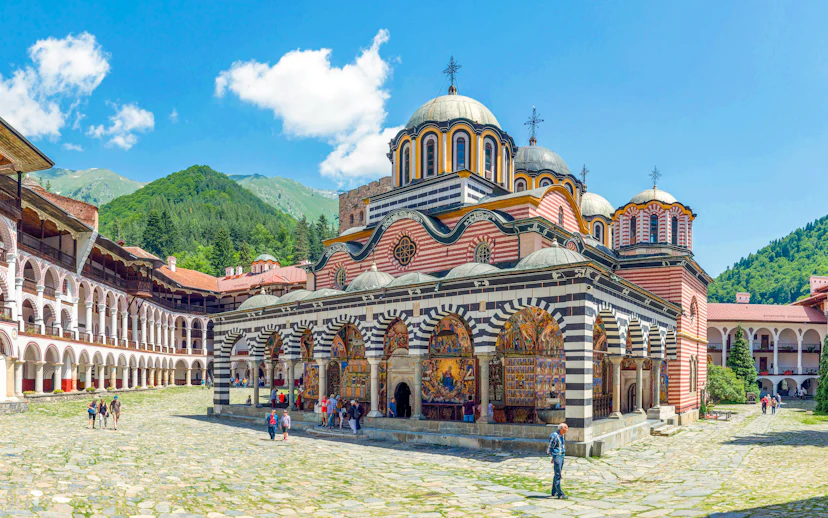
Rila Monastery is Bulgaria’s best-known Orthodox monastery, famous for its striped arcades, richly painted church, and mountain setting. A visit feels calmer and more spacious than many city landmarks, but timing still matters because Sofia day tours tend to arrive in the same late-morning window. Most people see the courtyard and church, then leave too quickly for the tower or museums. This guide helps you time your arrival, choose the right visit length, and avoid the parts most visitors miss.
Quick overview: Rila Monastery at a glance
If you’re deciding whether to visit independently or book a day tour from Sofia, these are the details that change the experience most.
- When to visit: Daily, with the monastery complex open through the day and museums on shorter daytime hours. Before 10am is noticeably calmer than 11am–1pm, because that’s when most Sofia coaches arrive and the courtyard feels much more crowded.
- Getting in: From €4 for paid on-site admissions beyond the main church and courtyard, which are commonly visited first. Guided day tours from Sofia are the easiest option if you want transport, a guide, or a combo stop like Boyana Church or the Seven Rila Lakes.
- How long to allow: 1.5–2 hours works for most visitors. It stretches toward 2.5–3 hours if you add the museums, Hrelyo Tower in summer, and a bakery stop.
- What most people miss: Hrelyo Tower and Raphael’s Cross are the two big ones, because many tour groups spend nearly all their time in the church and courtyard.
- Is a guide worth it? Yes, if you’re coming from Sofia and want the history explained in context; if you’re already driving yourself, a good audio guide is usually enough for the monastery itself.
🎟️ Tickets for Rila Monastery day tours from Sofia can sell out a few days in advance during summer weekends and holiday periods. Lock in your visit before the departure you want is gone. See ticket options
Jump to what you need
🕒 Where and when to go
🗓️ How much time do you need?
🎟️ Which ticket is right for you?
🗺️ Getting around
♿ Facilities and accessibility
Restrooms, parking, accessibility details, and family services
Where and when to go
How do you get to Rila Monastery?
Rila Monastery sits deep in the Rila Mountains, about 117km south of Sofia, and the final stretch feels more like a mountain approach than a city stop.
Rila Monastery, 2643 Rila, Bulgaria
- Car: Sofia city center → 2.5–3 hours → best if you want flexibility for the museums, bakery, and a slower visit.
- Day tour transfer: Sofia meeting point at ul. ‘Yanko Sakazov’ 9 → full-day round trip → simplest if you don’t want to manage mountain roads or parking.
- Bus + taxi: Sofia to the Rila area → final taxi leg to the monastery → workable, but slower and less practical than a tour.
- Taxi / private transfer: Direct drop-off at the outer parking area → shortest walk in → useful if you’re splitting costs in a small group.
Getting here from nearby cities
Rila Monastery works best as a day trip from Sofia, but it’s also reachable from south-west Bulgaria if you’re already traveling through the mountains.
From Sofia
- Distance: 117km
- Travel time: 2.5–3 hours by car or full-day coach tour
- Time to budget: This still leaves a comfortable monastery visit, but not much room for extra stops unless you book a combo tour.
From Blagoevgrad
- Distance: 45km
- Travel time: About 1 hour by car
- Time to budget: Good if you want a slower visit with time for the museums and bakery.
From Bansko
- Distance: About 95km
- Travel time: About 2–2.5 hours by car
- Time to budget: Possible as a long half-day, but it works better if Rila Monastery is your main stop.
Which entrance should you use?
Rila Monastery is straightforward once you arrive, and the mistake most visitors make is assuming there are separate visitor entrances inside the complex. In practice, you approach through the main outer gate and then branch off to the church, museums, or bakery.
- Located at the main visitor approach beside the parking area and outer gate. Expect little to no wait on most days, though museum ticket lines can slow to 10–15 min around 11am–1pm.
When is Rila Monastery open?
- Monday–Sunday: 7am–8pm for the main monastery complex
- Monday–Sunday: 8:30am–4:30pm for the museums
- June–September: Hrelyo Tower usually operates on a summer-only schedule
- Last entry: 4pm is the safest cut-off if you want museum access the same day
When is it busiest: Weekends, Bulgarian holidays, and July–September from 11am–1pm are the busiest windows, when tour buses overlap and the church entrance area feels much tighter.
When should you actually go? Before 10am or after 3pm gives you more breathing room in the courtyard and better odds of seeing the museums without moving in a crowd.
How much time do you need?
| Visit Type | Duration | Activities Included | Tips |
|---|---|---|---|
Quick visit | 1.5–2 hours | Explore the main church, stroll the courtyard, bakery stop. | Visit before 10am or after 3pm for fewer crowds. |
Extended visit | 2.5–3 hours | Explore the main church, museums, Hrelyo Tower, Raphael’s Cross. | Allocate time for detailed exploration of frescoes and interiors. |
Which Rila Monastery ticket is best for you
| Ticket type | What's included | Best for | Price range |
|---|---|---|---|
From Sofia: Rila Monastery Guided Tour | Round-trip transfers from Sofia + expert guide or smart audio guide + entry to Rila Monastery + Boyana Church entry on selected option | A first visit where you want transport handled and enough context to make the church, frescoes, and museum stop more meaningful | €44 |
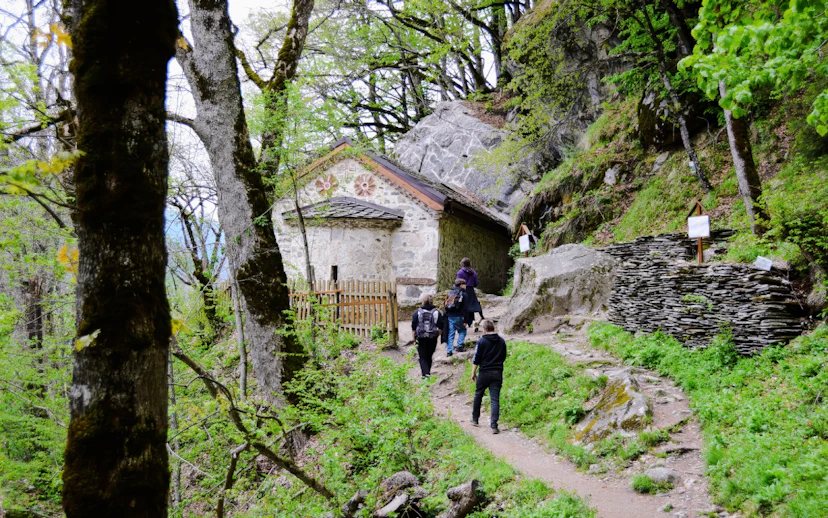
From Sofia: Rila Monastery & St. Ivan Cave Day Tour | Round-trip transfers from Sofia + visit to Rila Monastery + hike to St. Ivan Cave + free time to try mekitsi + live guide or audio guide on selected option | A monastery visit that feels too short on its own and works better with a short hike and a less crowded second stop | €25 |
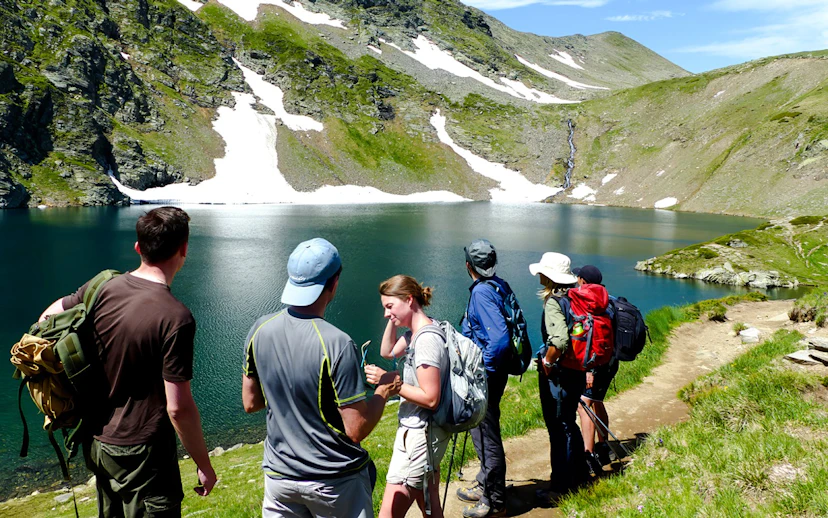
From Sofia: Rila Monastery & The Seven Rila Lakes Day Tour | Round-trip transfers from Sofia + Rila Monastery visit + cable car ride + 3.5-hour trek + live mountain guide or audio guide on selected option | You want one long day that combines Bulgaria’s best-known monastery with its most popular mountain scenery | €45 |
How do you get around Rila Monastery?
Layout and suggested route
Rila Monastery is best explored on foot, and while the complex isn’t huge, it’s layered enough that a loose route helps. The main church sits at the center of the courtyard, so you orient yourself almost immediately once you’re inside.
- Church of the Nativity: Main church at the center of the courtyard → frescoes, iconostasis, and active worship space → 30–45 min
- Courtyard arcades: Rectangular cloisters around the church → exterior murals, galleries, and best photo angles → 15–20 min
- Hrelyo Tower: Medieval stone tower near the main courtyard → oldest structure on site and summer panoramic climb → 10–20 min
- Museum rooms: Separate heritage spaces around the complex → icons, manuscripts, Raphael’s Cross, and monastic rooms → 30–60 min
Suggested route: Start with the church before the busiest tour window, then move to the courtyard frescoes while your eyes adjust to the scale of the site. Leave the museums and tower for last, because that’s where most rushed day-trippers run out of time.
Maps and navigation tools
- Map: A simple on-site orientation map is enough for the monastery complex → it covers the main buildings and museum areas → check it near the entrance before you head into the courtyard.
- Signage: Wayfinding is decent for the church and courtyard, but it’s easy to miss the smaller museums if you don’t look for them deliberately.
- Audio guide / app: Select Headout tours include audio guides in English, Spanish, Italian, German, French, or Russian → worth it if you’re visiting independently and want context without joining a group.
💡 Pro tip: Download your audio guide before leaving Sofia — the monastery setting is part of the appeal, but mobile signal can be less reliable once you’re deep in the mountains.
Get the Rila Monastery map / audio guide
What are the most significant spaces in Rila Monastery?

Church of the Nativity
Era: 1834–1837
This is the heart of the monastery and the space most visitors come for. The striped arches outside are striking, but the real reason to slow down is the interior iconostasis, carved over five years, and the dense layers of religious painting around it. What many people miss is that the exterior frescoes already tell part of the story — don’t rush straight inside without looking up first.
Where to find it: At the exact center of the main courtyard
Courtyard frescoes
Era: 19th-century Bulgarian National Revival
The courtyard works as an open-air gallery, with painted walls, wooden galleries, and mountain views all framing the church. Most visitors walk across it quickly on their way to the main entrance, but the best details are on the outer walls, including dramatic judgment scenes and smaller narrative panels higher up. This is also the best place for photography, since interior photos are not allowed.
Where to find it: All around the main rectangular courtyard, especially along the church façade and covered walkways
Hrelyo Tower
Era: 1335
Hrelyo Tower is the oldest surviving building in the complex and the clearest reminder that this was once a fortified monastery. The climb is short, but it changes your sense of the site by showing how compact the courtyard is against the surrounding forested slopes. Many visitors miss it because they assume the church is the whole experience, and the tower is only open seasonally.
Where to find it: Off the main courtyard, close to the church and museum area
Church History Museum and Raphael’s Cross
Era: 18th–19th-century collection, with a 19th-century carved cross
If you only add one museum room, make it this one. Raphael’s Cross is the standout — an extraordinarily intricate carved wooden cross that rewards a slower look more than almost anything else on site. Visitors often skip it because they’ve budgeted time only for the church, but it’s one of the strongest reasons not to treat the monastery as a 45-minute stop.
Where to find it: In the museum complex within the monastery grounds
Icon Gallery
Era: 18th–19th centuries
The Icon Gallery is quieter than the church and lets you look closely at devotional art without the same crowd flow. It adds a different kind of context, especially if you want to understand how the monastery functioned as a living religious and cultural center, not just a photogenic landmark. Most visitors miss it simply because they don’t realize the museum spaces are separate from the main church.
Where to find it: In the monastery museum rooms around the courtyard complex
Facilities and accessibility
- 🎒 Bag policy: Large suitcases and oversized luggage are not allowed inside, so keep your visit light and carry only a small day bag.
- 🚻 Restrooms: Restrooms are available near the entrance area, and visitors should expect a small usage fee.
- 🍽️ Bakery: The monastery bakery near the exit sells fresh mekitsi and yogurt drinks, and it’s the best-value food stop on site if you want something quick.
- 🛍️ Gift shop / merchandise: Small souvenir stalls and shop counters near the exit and tower area are the main places to buy icons, postcards, and religious keepsakes.
- 🪑 Seating / rest areas: Benches in the courtyard and along the arcades are the easiest places to pause without leaving the complex.
- 🅿️ Parking: Parking is available by the main visitor approach, and drivers should carry cash because on-site fees are commonly paid locally.
- ♿ Mobility: Access is limited because the courtyard is cobbled, the museums involve stairs, and the full visit is not wheelchair accessible end to end.
- 👁️ Visual impairments: A live guide or audio guide is the most useful support here, because the site experience depends heavily on visual details and there’s limited tactile interpretation.
- 🧠 Cognitive and sensory needs: The quietest visit window is usually before 10am or after 3pm, while the loudest and most crowded period is the late-morning coach-tour rush in the courtyard.
- 👨👩👧 Families and strollers: The courtyard is manageable with a stroller, but cobbles, steps, and tighter museum interiors make the route less pushchair-friendly once you go beyond the main open area.
Rila Monastery works well for children if you treat it as a short cultural stop rather than a long museum day, because the architecture, bells, courtyard, and bakery give them enough variety without demanding hours of quiet focus.
- 🕐 Time: 60–90 min is realistic with younger children, and the church exterior, courtyard, and bakery are usually the easiest parts to prioritize.
- 🏠 Facilities: Restrooms near the entrance make family logistics easier, but there aren’t many dedicated child-focused facilities inside the complex.
- 💡 Engagement: Turn the visit into a spotting game by asking children to find animals, angels, and bright colors in the exterior frescoes before going indoors.
- 🎒 Logistics: Bring layers, water, and a small snack, and aim for an early arrival so kids aren’t dealing with the busiest coach-tour period.
- 📍 After your visit: The open space and river area just outside the monastery walls are useful for a short reset before the drive back.
Rules and restrictions
What you need to know before you go
- Entry requirement: General visits are straightforward, but museum areas and some add-ons require separate paid admission or a tour that includes them.
- Bag policy: Large bags and suitcases are not allowed inside the monastery, so a small backpack or crossbody bag is the safest choice.
- Re-entry policy: Re-entry to the grounds is usually manageable, but on a guided day tour leaving the group can mean missing your return transport.
Not allowed
- 🚫 Food and drink: Eating is best kept outside the church and main sacred spaces, with the bakery and entrance area being the practical place for snacks.
- 🚬 Smoking / vaping: Smoking is not permitted within the monastery grounds.
- 🐾 Pets: Pets are not permitted, though registered service animals may be accepted.
- 🖐️ Touching and behavior: Don’t touch icons, frescoed surfaces, or religious objects, because this is an active monastery and not just a museum site.
Photography
Photography is generally fine in the courtyard and exterior areas, where the frescoes and arcades are one of the main visual highlights. Inside the main church, photography is not allowed, and visitors should also avoid flash, tripods, selfie sticks, and filming equipment in restricted interior spaces. If you want photos, plan to take most of them outside before or after going into the church.
Dress code
Rila Monastery enforces a dress code for entry to the religious areas. Entry may be refused if the requirements below are not met.
Required:
- Shoulders covered
- Knees covered
- No revealing clothing inside sacred spaces
Good to know: The easiest fix is to carry a light layer or scarf in your bag, because tour-day clothing is the most common reason visitors get caught out.
⚠️ Dress code is enforced at the entrance with no exceptions. Shorts and strappy tops are the most common reasons people have to adjust their clothing before entering.
Good to know
- Separate tickets: The church and courtyard are the core visit, but museums and tower access are separate decisions that many visitors only realize once they’re already inside.
- Seasonal access: Hrelyo Tower is typically a summer-only add-on, so don’t build your whole visit around it outside the warmer months.
Practical tips
- Booking and arrival: If you’re visiting from Sofia, book your day tour a few days ahead in summer and arrive 15 min early at the meeting point, because the buses leave on schedule and late arrivals usually miss the departure.
- Pacing: Don’t burn all your time in the church doorway; save 30–45 min for the museums if you care about craftsmanship, because Raphael’s Cross is one of the most memorable details on site.
- Crowd management: The sweet spot is before 10am or after 3pm, because the monastery’s busiest period is driven by coach arrivals rather than a steady all-day flow.
- What to bring or leave behind: Bring cash in BGN, a light layer, and a small bag; large luggage is not allowed, and the bakery, parking, and smaller purchases are easiest if you can pay locally.
- Food and drink: Eat lightly before you arrive and use the monastery bakery for a snack, because the mekitsi are worth the stop and can sell out by mid-afternoon.
- Dress code: Pack something that covers shoulders and knees even in summer, because this is a functioning religious site and changing your outfit on the spot is an avoidable hassle.
- If you’re pairing it with a hike: Choose the From Sofia: Rila Monastery & The Seven Rila Lakes Day Tour only if you’re comfortable with a long day, because the monastery visit becomes much shorter when the lakes are part of the same itinerary.
What else is worth visiting nearby?
Commonly paired: Boyana Church
Distance: About 90km — 1.5–2 hours by road from the monastery on the Sofia side
Why people combine them: It’s the cleanest same-day culture pairing from Sofia, because both are UNESCO-listed religious sites and the route works well as a loop.
Book / Learn more
✨ Rila Monastery and Boyana Church are most commonly visited together — and simplest to do on a combo ticket. The practical advantage is that one booking handles transport and timing for both sites, so you don’t lose time piecing the day together yourself. → See combo options
Commonly paired: Seven Rila Lakes
Distance: About 35km — 45–60 min by road to the lift area, plus cable car and hiking time
Why people combine them: It’s the best culture-and-nature pairing in the region, but only if you’re happy with a long, active day rather than a slow monastery visit.
Book / Learn more
Also nearby
St. Ivan Cave
Distance: About 4km — short drive plus a 15–20 min hike
Worth knowing: It adds a more hermit-like, spiritual counterpoint to the monastery and works well if the main site alone feels too brief.
Town of Rila
Distance: About 5km — 10 min by road
Worth knowing: It’s the practical stop for a simple meal, supplies, or a break before heading back toward Sofia.
Eat, shop and stay near Rila Monastery
- On-site: The monastery bakery is the clear default stop for fresh mekitsi and a quick yogurt drink, and it’s worth it for value and atmosphere rather than as a full meal.
- Monastery bakery (inside the exit area): Fried dough, sweet snacks, and drinks, with the best reason to go being that it’s fast, cheap, and genuinely part of the visit.
- Town of Rila restaurants (10-min drive, Rila): Simple Bulgarian meals and sit-down options, best if you want something more substantial after the monastery.
- Roadside mehanas toward Sofia (on the return route): Traditional grill-heavy menus and larger portions, useful if you’re driving back and don’t want to depend on the bakery timing.
- 💡 Pro tip: Eat the mekitsi before 12 noon if you can — that’s when the line is usually shorter and the chance of a sell-out is lower.
- Monastery souvenir stalls: Postcards, magnets, small icons, and religious keepsakes sold near the exit and main visitor flow.
- Museum / tower shop counters: Small selections of devotional items and monastery-themed souvenirs, worth checking if you want something more site-specific than the outdoor stalls.
For most travelers, this is better as a day trip than a base. The setting is beautiful and peaceful, but the area around the monastery is quiet, limited at night, and less practical than staying in Sofia unless you’re building in hiking time or specifically want a retreat-like stop. If you do stay, do it for the atmosphere rather than restaurant variety or evening activity.
- Price point: The area is simpler and usually more budget-to-midrange than central Sofia, but options are also much more limited.
- Best for: Travelers who want an early start, a slower monastery visit, or a two-part trip that includes the Seven Rila Lakes or nearby hiking.
- Consider instead: Sofia is the better base for most short trips because transport, food, and tour choice are easier; Sapareva Banya makes more sense if you want hot springs and mountain time around the monastery visit.
Frequently asked questions about visiting Rila Monastery
Most visits take 1.5–2 hours. If you add the museums, Raphael’s Cross, and Hrelyo Tower in summer, plan for 2.5–3 hours instead. The site itself is not huge, but people often spend longer than expected in the church and courtyard once they start looking closely at the frescoes.
No, you usually don’t need advance booking for a simple on-site visit. You should book ahead if you’re taking a day tour from Sofia, especially in summer, on weekends, or if you want a specific option like Boyana Church, St. Ivan Cave, or the Seven Rila Lakes added to the same day.
Rila Monastery doesn’t usually run like a strict timed-entry attraction for general visits. If you’re joining a Sofia tour, arrive 15 minutes early at the meeting point; if you’re visiting independently, aim to reach the monastery before 10am to avoid the late-morning coach-tour rush.
Yes, you can bring a small bag or backpack. Large suitcases and oversized luggage are not allowed inside, so travel light if this is part of a longer road trip. A small day bag is the easiest option for carrying layers, cash, and water without slowing you down.
Yes, you can take photos in the courtyard and exterior areas, but not inside the main church. Flash, tripods, selfie sticks, and filming equipment are also restricted in interior religious spaces. If photography matters to you, leave time for the exterior frescoes because that’s where most of the best shots are.
Yes, group visits are common and the monastery handles them well. In fact, most late-morning visitors arrive as part of organized coach tours from Sofia. If you want a quieter experience, go independently or choose an earlier arrival, because big groups change the feel of the courtyard more than the walking distance does.
Yes, Rila Monastery works well for families if you keep expectations realistic. Most children do well with a 60–90 minute visit focused on the courtyard, striped arches, bells, and bakery stop. It’s less successful as a long museum-heavy visit, especially during the busiest late-morning period.
No, Rila Monastery is not fully wheelchair accessible. The cobbled courtyard, stairs, thresholds, and museum layouts make the full visit difficult, and several tour options also state that the experience is not suitable for people with limited mobility. The open courtyard is easier than the complete route, but access is still partial.
Yes, the monastery bakery is the most useful on-site food stop. It’s known for mekitsi, a warm fried dough snack that is quick, cheap, and easy to fit into a short visit. If you want a full meal, the better plan is to eat in the town of Rila or on your route back toward Sofia.
Yes, modest dress is required for entry to the religious areas. You should keep shoulders and knees covered, and revealing clothing can get you stopped at the entrance. In warm weather, the easiest fix is carrying a light layer or scarf rather than hoping relaxed summer clothing will be accepted.
The best time to visit is before 10am or after 3pm. The late-morning period from roughly 11am–1pm is usually the most crowded because that’s when Sofia day tours overlap. Outside that window, the courtyard feels calmer and you’re more likely to experience the monastery as a working religious place instead of a busy stop on a group circuit.